
New Hire Onboarding That Gets People Into the Conversation
Starting a new job means learning the role, the company, and an entirely new group of people at the same time. Give your new hires a place to connect, contribute, and practice working together from the start.
A good first week teaches more than where everything lives.
Most onboarding programs have a lot of information to cover. Systems. Policies. Benefits. Processes. Organizational charts. Maybe a very ambitious slide deck.
Meanwhile, every new employee is also trying to figure out something less formal: how to become part of the organization they just joined.
How do people communicate here? When should I speak up? Who can I ask for help? What happens when I don’t know the answer yet?
Improv-based training gives new hires a place to practice those moments together. Participants listen, respond, contribute ideas, adjust when something changes, and begin building relationships before routine and hierarchy settle in.
Practice the skills that make joining a new team easier.
Improv training is built around paying attention, responding in the moment, and helping other people succeed. Those behaviors translate naturally to the first days and weeks of a new job.
Get comfortable contributing
A new employee can know the answer and still hesitate to say it. Participants practice entering the conversation, sharing ideas clearly, and contributing without waiting for everything to feel perfectly rehearsed.
Listen before deciding what comes next
Good collaboration starts with understanding what someone else is actually saying. Improv puts attention on the other person and asks participants to respond to what is happening rather than what they expected to happen.
Build on someone else’s idea
Teams work better when people treat ideas as something to develop together. Participants practice recognizing useful contributions, making room for different perspectives, and helping the group move forward.
Adapt when the script changes
A new job comes with questions, unexpected requests, unfamiliar situations, and shifting priorities. Participants practice staying present, adjusting, and continuing the conversation when the plan changes.

Make connection part of the onboarding process.
Role-specific training teaches people what they need to know. This work helps them practice how they’ll communicate, collaborate, and participate once they start using that knowledge.
New Employee Cohorts
Help people build relationships across departments while establishing useful communication habits early.
Early-Career Employees
Give newer professionals practice asking questions, sharing ideas, working with more experienced colleagues, and navigating unfamiliar situations.
Rotational & Development Programs
Create stronger connections across a cohort that may spend much of the program working on different teams, assignments, or locations.
The sooner people feel comfortable contributing, the sooner they can become part of the team.
Active training. Not another onboarding presentation.
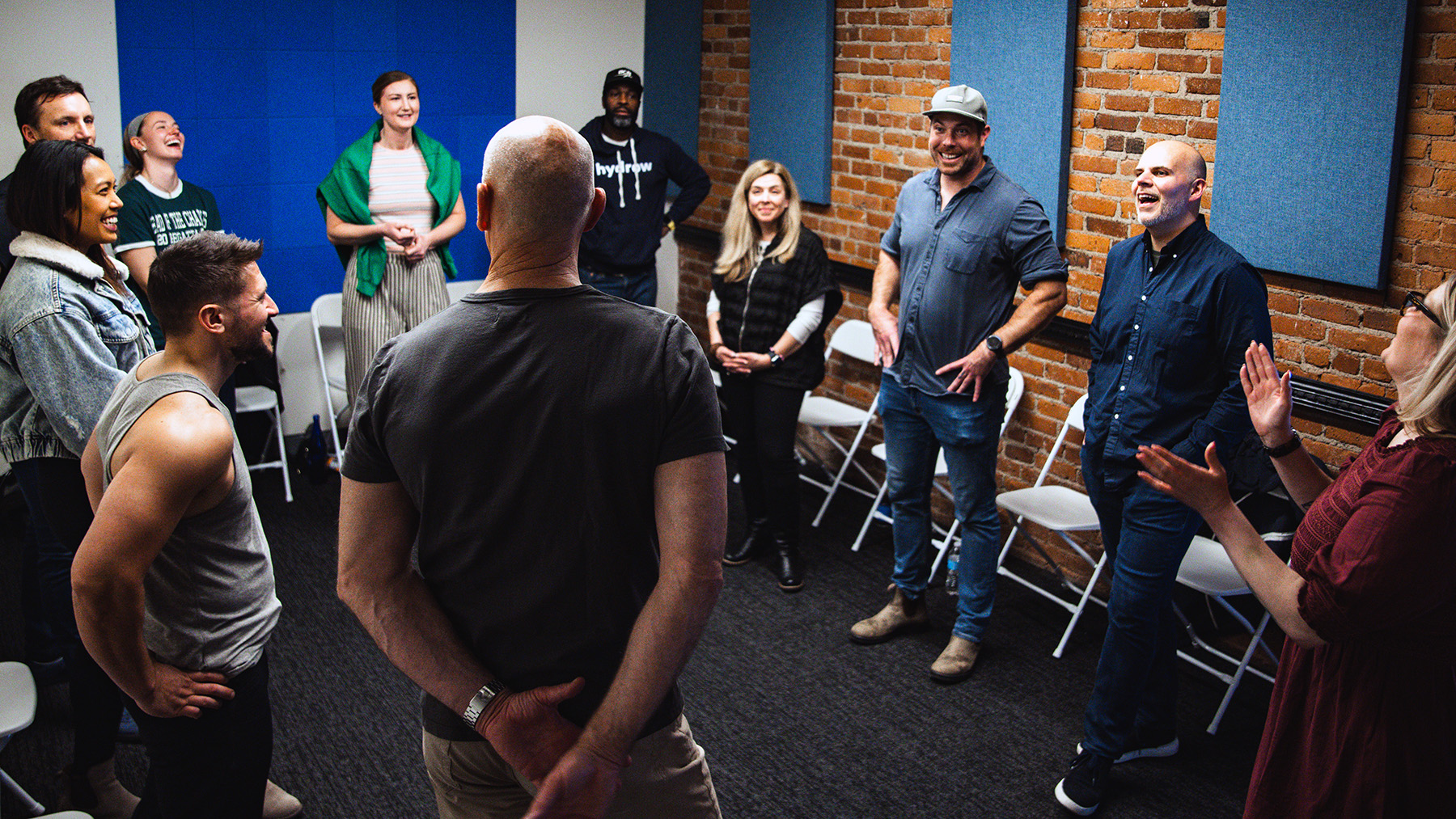
Participants work through guided, interactive exercises with experienced facilitators. We start with approachable activities and build from there, allowing the group to become more comfortable participating together.
Throughout the session, we pause to look at what happened and connect it to work. What made it easier to contribute? What happened when somebody listened more closely? What helped people support one another?
Build it into the onboarding journey.
Start during orientation
Give a new cohort something meaningful to do together while people are still learning names, roles, and how the organization works.
Reinforce it after the first few weeks
Once employees have some workplace context, revisit communication and collaboration with real experiences behind the conversation.
Reconnect the cohort later
Bring people back together after they’ve moved into separate teams or assignments. Reestablish connections and compare what they’ve learned.
Build the session around your onboarding program.
Tell us how many people are joining, where they are in the onboarding process, and what you want them to practice. We’ll help you choose the right format.
Signature Program
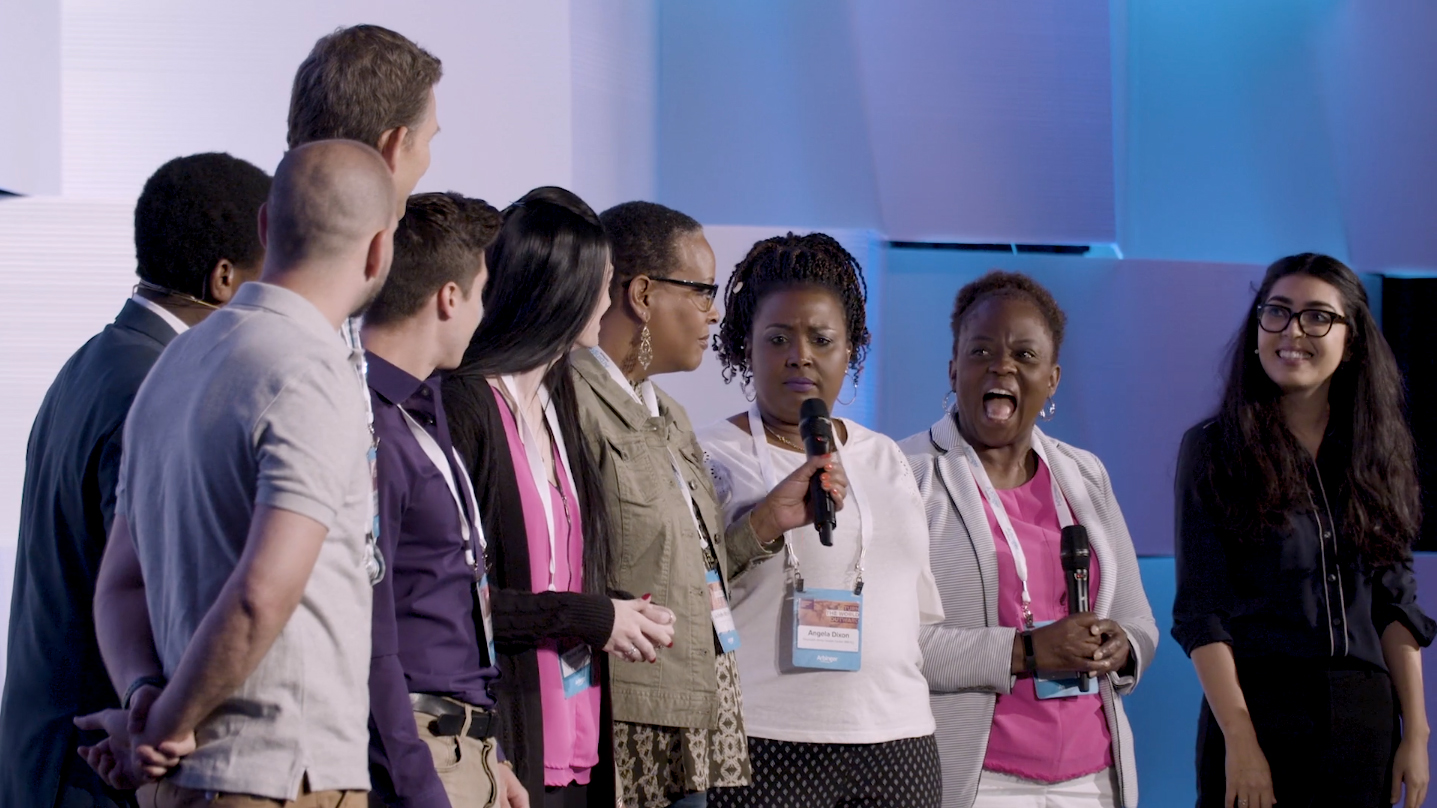
A hands-on workshop where everyone gets direct practice with improv-based exercises, guided discussion, and facilitated group work.
Explore the Signature ProgramKeynote Experience
A strong option for larger onboarding groups, combining an interactive presentation with opportunities for the audience to participate together.
Explore the Keynote ExperienceCustom Solutions
Develop original programming around your organization’s values, onboarding curriculum, leadership expectations, or specific communication challenges.
Explore Custom Solutions
Your new hires are learning the organization. Help them learn how to join it.
A successful start isn’t only about transferring information. New employees are learning when to ask questions, how their colleagues communicate, what useful participation looks like, and where they fit into the larger organization.
Give them a place to practice that part, too.
New hire onboarding training FAQs
Is this meant to replace our existing onboarding program?
No. It’s designed to complement the work you’re already doing. Your organization provides the role-specific knowledge, systems, policies, and expectations. We focus on communication, participation, collaboration, and connection.
Is this appropriate for experienced hires as well as early-career employees?
Yes. Starting somewhere new creates many of the same communication challenges regardless of seniority. We can adjust the exercises and discussion based on the experience level of the group.
What about quieter or more introverted participants?
Being the loudest person in the room isn’t the objective. Listening, noticing, supporting other people, and contributing thoughtfully are all part of the work. Our facilitators build participation gradually rather than putting people on the spot.
When should we schedule the session?
It can work during orientation, within the first few weeks, or later as a cohort reconnection. The best timing depends on what you want the group to practice and how your onboarding program is structured.
Can you facilitate at our office?
Yes. We work at client offices, meeting spaces, conference venues, and offsite locations across the country. Virtual and hybrid formats can also be discussed for distributed teams.
Give your new hires a stronger start.
Tell us who’s joining you, how your onboarding program works, and what you want the group to practice. We’ll help you find the right format.
Share a few details below and we’ll get back to you with next steps.